By Tom Handford MRICS
During the early 2010s, the Building Research Establishment and subsequently BEIS recognized that numerous retrofit projects were failing. In response, BEIS released a review coordinated with the Department for Communities and Local Government. The 2016 document titled "Each Home Counts" provided 27 key recommendations for improving industry support in the energy efficiency sector. Recommendations 1 and 8 proved particularly significant to this discussion.
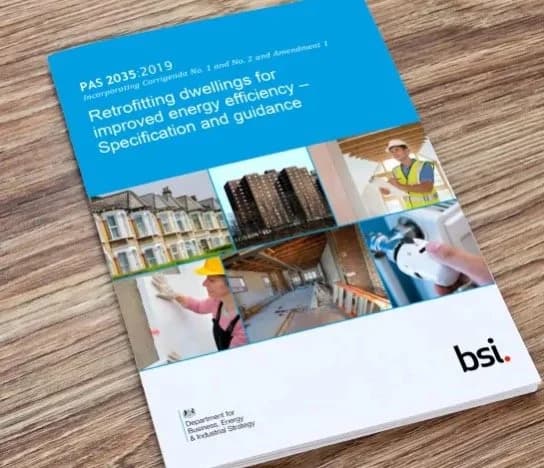
Recommendation 1 required every government-funded project to be delivered under a quality mark, subsequently identified as TrustMark, a government-endorsed consumer protection scheme. Recommendation 8 called for a new construction industry framework specifically addressing energy improvement works. The British Standards Institute received a commission to develop and publish the BSI Publicly Available Specification (PAS) 2035, an overarching framework for project delivery addressing risks associated with energy efficiency projects.
For developers and clients requiring project delivery under TrustMark, complete compliance with the PAS 2035 framework is mandatory. The framework establishes five clear roles in the retrofit process and divides each project into six distinct phases, all overseen by the Retrofit Coordinator. This coordinator role is central to the new process and bears ultimate responsibility for ensuring PAS 2035 compliance.
While retrofit delivery under TrustMark remains voluntary in the UK, all government funding opportunities require compliance as a funding prerequisite. The UK government expects customers will eventually recognize TrustMark and routinely verify it similarly to checking Gas Safe registration for heating engineers. This expectation receives support from PAS 2035 and Retrofit Academy training references in strategic documents, including the BEIS Heat and Buildings Strategy.
Develeco holds certification as Retrofit Coordinators under PAS 2035. By implementing risk-based retrofit approaches, their proposals address current energy crises and rising living costs while reducing bills, enhancing comfort, decreasing environmental impact, and creating healthier living and working environments.